Rabbit Bunny Gaming Gamer – What You Need to Know Before Using This Design
If you have come across a Rabbit Bunny Gaming Gamer illustration and wondered whether it fits your next project, you are not alone. Many creators, small business owners, and hobbyists are drawn to this playful yet energetic design style. The combination of a cute rabbit or bunny motif with gaming aesthetics creates something that appeals to a broad audience, from casual players to dedicated fans of gaming culture. But before you download, print, or sell products featuring this artwork, there are several practical considerations that can make the difference between a polished result and a disappointing one.
This article walks through common mistakes people make when choosing and using designs like Rabbit Bunny Gaming Gamer, and offers straightforward advice to help you get the best outcome for your shirts, mugs, sublimation projects, and more.
Understanding What Rabbit Bunny Gaming Gamer Really Offers
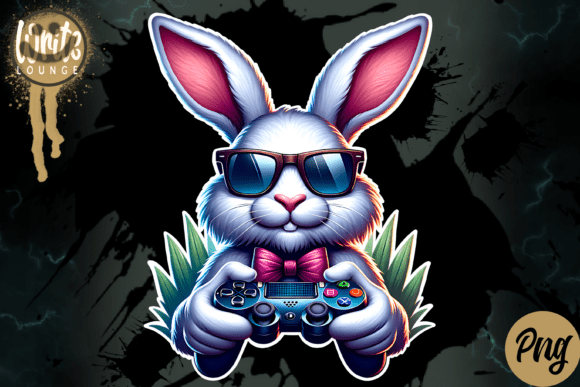
At its core, Rabbit Bunny Gaming Gamer is a digital illustration that merges the charm of a bunny character with gaming-related elements. Think joysticks, controllers, pixel accents, or retro arcade vibes combined with an adorable rabbit persona. It is designed for sublimation, meaning the artwork is meant to be transferred onto various surfaces using heat and pressure. Because it comes as a high-resolution PNG file with 300 dpi and pixel dimensions over 4000 by 4000, it promises sharp, detailed prints even on larger items like hoodies or XXL mugs.
What many people overlook is that the versatility of such a design depends heavily on how well it fits the intended product and audience. The same illustration that looks perfect on a child-sized tee may need adjustment for an adult hoodie. The bunny motif might read as too juvenile for some gaming apparel lines, while being just right for a playful accessory brand. Understanding your own market and use case matters far more than the file specs alone.
Mistake 1: Ignoring the background and file format
Because Rabbit Bunny Gaming Gamer comes as a PNG file, it may include a transparent background. That is excellent for layering over colored garments or placing the design on mugs without a white box around it. However, some people assume PNG is always ready to print. In sublimation, the white areas of your paper will not transfer, so if the bunny has white fur, those parts will take on the color of the substrate. A bunny with white fur printed on a dark mug will simply show the mug color through, which might look unfinished. You may need to add a white underbase or adjust the artwork to include a colored or outlined version of the bunny so it reads clearly on dark backgrounds.
Another common oversight is downloading the PNG and using it directly in a design program without checking the resolution. Even though the file says 300 dpi and 4000 px, some software may automatically downsample or resize imported images. Always verify that the actual pixel dimensions remain intact before printing.
Mistake 2: Assuming one size fits all products
A single PNG at 4000 by 4000 pixels gives you a large canvas, but scaling it down for a small sticker or up for a large banner requires attention. If you shrink the image too much, you lose the fine details like the bunny’s whiskers or the lettering on a controller. If you enlarge it beyond the original dimensions, you invite pixelation even with a high-res file. The sweet spot is to keep the design at or below its native size. For a standard 11-ounce mug, for instance, you rarely need more than about 8 inches in width, which 4000 px can handle easily. For a full-back hoodie print, you may approach the limit, so test a sample first.
One reader I worked with printed the exact same rabbit design on both a small tumbler and a large tote bag. The tumbler looked crisp, but the bag showed soft edges because the file was stretched too far. They assumed the high pixel count meant unlimited scaling. It does not. Always match the print dimensions to the product dimensions, and if you must go bigger, consider upscaling through software that preserves sharpness.
Mistake 3: Overlooking the audience and brand fit
Gaming designs often attract a wide age range, but the bunny theme can polarize viewers. Some adult gamers love cute mascots and kawaii aesthetics. Others prefer gritty, realistic, or minimal styles. If you are selling to a general gaming audience, a Rabbit Bunny Gaming Gamer illustration might work best on accessories, phone cases, or casual wear rather than on formal gaming merchandise. If your brand leans toward humor and whimsy, this design is a natural fit. If you aim for a serious, competitive gaming vibe, the bunny may feel mismatched.
A marketer I know printed this design on a series of mugs for a gaming cafe. They sold well as novelty items but did not appeal to the tournament crowd. The lesson is to know your customer. If you are unsure, run a small poll or test a few samples before committing to a bulk order.
Check the file details before buying or downloading
When you see a listing for Rabbit Bunny Gaming Gamer, confirm that the PNG file meets your needs. Look for the following:
- Resolution: 300 dpi is standard for print, and 4000 px gives you room for medium to large products.
- Color mode: Sublimation typically uses CMYK or sRGB. If the file is in a different profile, you may see color shifts.
- Layer structure: Some PNGs are flattened, meaning you cannot edit individual elements. If you want to change the bunny’s expression or remove the controller, you need a layered file or an editable format.
- Watermarks or licensing: Free previews often have watermarks. Ensure you purchase or download the full, clean version.
If the listing does not specify these details, ask the seller or creator before purchasing. A quick check saves you from printing a blurry or discolored design.
Prepare your design for sublimation
Once you have the PNG, open it in your preferred editing software. If the bunny has white or very light areas, decide how you want them to appear on the final product. For dark items, consider these approaches:
- Add a white layer behind the bunny using a separate white toner printer or a white transfer paper.
- Convert the bunny’s white fur to a light gray or pastel shade that will contrast with the substrate.
- Use a cut file approach where the design is printed on white transfer paper and then cut around the edges.
For light-colored products, the PNG is usually ready to go as long as the colors are vibrant. Test a single sample first before producing a batch.
Match the design to the product type
Not every product benefits from a large, detailed graphic. On a mug, the Rabbit Bunny Gaming Gamer design wraps around the cylinder. You want the bunny’s face or key elements to sit front and center, not wrapped awkwardly around the handle. On a T-shirt, consider placement: center chest, left chest, or full back. A full-back print can showcase the entire illustration, while a small left-chest logo works for a subtle look.
For sublimation projects like coasters or keychains, the design will be small, so ensure the bunny’s details are still visible. A 4000 px image scaled down to two inches will retain sharpness, but you may want to simplify the composition so it does not look cluttered.
Test the color accuracy
Monitors display colors differently from printers. A bright pink bunny on screen may come out as a dull magenta on a polyester mug. Request a proof print or use a color calibration tool. If you are ordering from a print-on-demand service, ask for a sample or check their color guidelines. Many platforms provide mockup generators, but those are approximations. Real-world results vary with heat, pressure, and time.
Evaluate the long-term durability
Sublimation prints last well if applied correctly, but the design itself matters. Fine lines and small text may fade or blur after repeated washing. The Rabbit Bunny Gaming Gamer illustration, with its bold shapes and clear outlines, is generally robust. Still, if the artwork includes tiny details like pixelated text or thin controller cables, those areas may degrade faster. Avoid overcomplicating the design for items that will see heavy use.
Verify the usage rights
Digital designs are often sold with specific licenses. Some allow unlimited commercial use. Others restrict the number of products you can sell or require attribution. Always read the terms. If you plan to sell physical items featuring Rabbit Bunny Gaming Gamer, confirm that the license covers commercial production. This step protects you from legal issues and supports the original artist.
Better Approaches for Different Creators
If you are a beginner, start with one product type. Print the design on a single mug or T-shirt and see how the colors, placement, and size work. Adjust the file as needed before expanding to other items. Experienced creators often batch-test multiple products simultaneously, but even they recommend a small pilot run.
For freelancers and small business owners, consider offering the design in two versions: one with the bunny and gaming elements combined, and one with just the bunny head for a simpler look. This gives customers choice and increases your product line without creating entirely new artwork. The original PNG can be cropped or edited in software to create these variations.
Marketers and bloggers can use the design as a visual hook for social media posts or website graphics. Because it is high resolution, it works well for banners, thumbnails, and email headers. Just remember to compress the file for web use to keep load times fast. A 4000 px PNG at 300 dpi may be several megabytes, which is fine for print but heavy for web. Save a separate version at 72 dpi and 1200 px for online use.
Final Thoughts on Making the Most of Rabbit Bunny Gaming Gamer
A well-chosen illustration can elevate your products and connect with your audience. Rabbit Bunny Gaming Gamer offers a unique blend of cute and cool that appeals to many gamers and gift buyers. But the file itself is only the starting point. Your success depends on how you prepare the design, match it to the right products, and test it before committing. By avoiding the common mistakes discussed here, you can produce prints that are sharp, color-accurate, and well-received. Whether you are a hobbyist making a gift or an entrepreneur building a product line, taking these extra steps pays off in quality and customer satisfaction.