Gaming Shirt Ready to Play Clipart PNG: What You Need to Know Before You Download and Use It
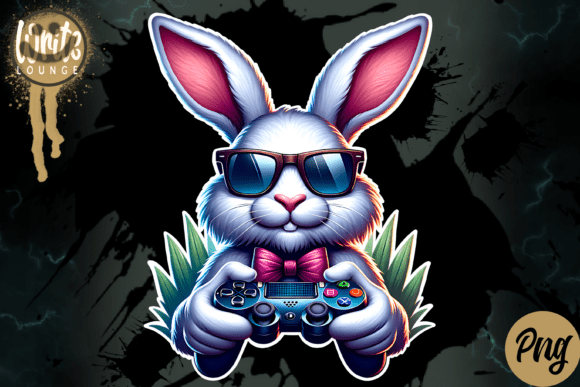
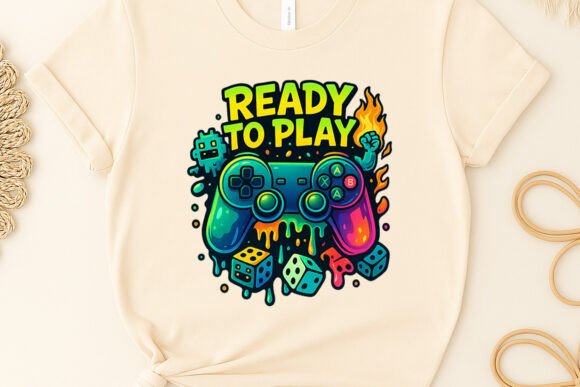
If you’ve been browsing for digital design resources lately, you’ve likely come across “Gaming Shirt Ready to Play Clipart PNG.” It’s a crisp, high-quality graphic that promises to save you time and deliver professional-looking results on everything from t-shirts to mugs. The appeal is obvious: one clean PNG file, a transparent background, and the freedom to use it for both personal and commercial projects. But many people jump too quickly, download the file, and end up with poor prints, wasted materials, or licensing headaches. This article walks you through the common pitfalls—and how to avoid them—so your projects actually turn out the way you imagined.
What This Clipart Actually Gives You
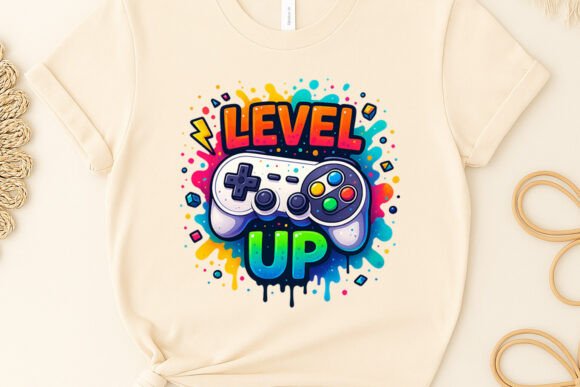
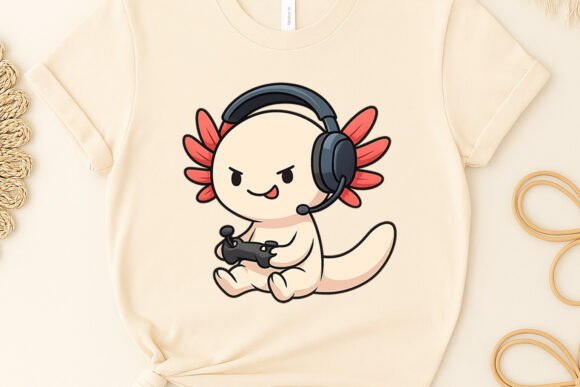
The “Gaming Shirt Ready to Play Clipart PNG” is a single design file packaged for immediate use. According to the product description, you receive one high-quality PNG with a transparent background, crystal-clear HD resolution, and permission for personal and commercial use. That sounds straightforward, and it is—if you know how to handle it. The design is intended for sublimation, print items, cards, crafts, home decor, stickers, bags, mugs, and more. But the file format and resolution only matter if you use them correctly. Many people assume a PNG is universally perfect for everything, and that’s where mistakes begin.
Mistake #1: Ignoring Resolution and Transparency Requirements
The product emphasizes “high-quality PNG files with transparent backgrounds” and “crystal-clear HD resolution.” But HD resolution can mean different things to different sellers. Some PNGs are 300 DPI (dots per inch) and ideal for print; others are 72 DPI and only suitable for screens. If you’re planning to print on a t-shirt, you need at least 300 DPI at the size you intend to use. A low-resolution PNG will look pixelated and blurry when enlarged.
What to check: Before downloading, confirm the actual pixel dimensions or DPI. If the file is only 500x500 pixels, it won’t stretch to a full chest print without losing quality. A better approach is to look for files that are at least 3000x3000 pixels at 300 DPI for large prints. The “Ready to Play” clipart should ideally be provided at a scale that lets you print up to 12x12 inches without distortion. If the product page doesn’t list exact dimensions, ask the seller or look for a sample that shows a detail zoom.
Another overlooked issue: transparency. A transparent background is essential for t-shirt designs because you don’t want a white box around your graphic. But ensure the transparency is genuine—some PNGs have a hidden white or semi-transparent edge that shows up when printed on dark shirts. Open the file in a program like Photoshop or GIMP and place it over a dark background to verify the edges are clean.
Mistake #2: Misunderstanding Commercial Use Terms
The product note says “Ready to use for personal and commercial.” That sounds like a green light to sell products with the design, but many digital clipart files come with restrictions you might miss. Some “commercial use” licenses limit the number of items you can sell, or they prohibit using the design in company logos or on merchandise platforms like Printful without adding your own original elements. Others may require attribution or forbid reselling the digital file itself.
How to avoid a violation: Read the full license agreement. If there’s no separate license, assume you can use the design on physical products you create (like t-shirts and mugs) and sell them, but you cannot redistribute the digital file or claim it as your own design. A common mistake is thinking “commercial use” means you can sell the exact same PNG to other buyers—that’s not allowed unless explicitly stated. For a single design like this, your safest path is to use it in your own printed products and not share the raw PNG with clients or customers. If you’re a small business owner, keep a copy of the purchase receipt and any license text in case of disputes.
Mistake #3: Scaling and Placing the Design Incorrectly
The “Gaming Shirt Ready to Play Clipart PNG” might be beautifully composed, but if you don’t scale it properly for the intended surface, the final result looks amateurish. For t-shirts, the common mistake is placing the design too high or too low. A design meant for the chest should sit about 2–4 inches below the collar and be centered horizontally. For mugs, the design should wrap around without too much gap, and you need to allow for the curve of the surface.
Better approach: Use a mockup before printing. Many online tools let you upload your PNG onto a blank t-shirt or mug mockup so you can adjust size and position. If you’re using sublimation, remember that the image will appear reversed on the transfer paper, but when pressed onto a polyester shirt, it will mirror back to correct orientation. That’s not a mistake if you’re prepared for it. But if you forget to flip your design horizontally before printing the transfer, your final shirt will show the image backward. Always test with a small print first.
For other items like stickers or frame artwork, scaling errors often come from not accounting for bleed or margins. If you print the design exactly at the canvas edge, you may have white borders or cut-off elements. Add a slight bleed area (at least 0.125 inch) and keep important elements away from edges.
Mistake #4: Overlooking Color Management for Print
The PNG file you download is likely in RGB color mode—perfect for screens. But most commercial printing processes (including sublimation and direct-to-garment) use CMYK. If you print an RGB PNG directly without conversion, the colors may shift dramatically. Bright neon greens can turn muddy, and dark reds may lose depth. The “crystal-clear HD” you see on your monitor might look completely different on a shirt.
What to do: Convert the PNG to CMYK before sending it to a printer. Use photo editing software to check and adjust the color profile. If you’re printing at home with a sublimation printer, ensure your printer driver is set to the correct paper and ink profiles. Also, avoid relying on your monitor’s brightness; calibrate it or use a color profile provided by your printer. A simple test print on plain paper can save you from wasting expensive sublimation blanks.
Another nuance: Some clipart designs rely on pure black for outlines, but pure black (CMYK: 0,0,0,100) often appears dark gray in sublimation. For crisp blacks, use a rich black formula (e.g., 60C, 40M, 40Y, 100K). Check whether the “Ready to Play” clipart uses black outlines or fills; you may need to adjust the color values manually for best results.
Mistake #5: Assuming One File Type Fits Every Project
The product is a PNG file, which is great for many applications but not ideal for every printing method. For screen printing, you might need a vector file (like SVG or AI) to separate colors. For embroidery, you need a stitch file. For large posters or banners, a PNG can work if resolution is high enough, but vector files scale infinitely. The product description says it’s perfect for “t-shirts, cards, bags, mugs, stickers, frame artwork, and much more,” but that’s only true if you understand the limitations of PNG.
How to handle it: If you’re doing sublimation, PNG with transparency is perfect—just ensure high resolution. For vinyl cutting (like heat transfer vinyl), you’ll need to trace the design and create a cut file. Many people try to use a PNG directly with a cutting machine, but the software often struggles with complex transparency and leaves jagged edges. It’s better to import the PNG into a vector program, convert it to a clean path, and then export as SVG or DXF. For web use or digital presentations, PNG is fine. But for professional production, consider whether you need a scalable vector. If the product only offers PNG, you may need to purchase additional software or spend time tracing.
Practical Steps Before You Buy or Download
- Verify file size and dimensions. Look for at least 300 DPI at your intended print size. A 1 MB file is likely too small for a large shirt design.
- Check the transparency quality. Zoom in on the preview to see if edges are smooth or jagged. Request a sample if unsure.
- Read the license carefully. Even if it says “commercial use,” confirm you can use it on print-on-demand products, and that there’s no cap on sales.
- Test color conversion. If you work in CMYK, convert the PNG and compare. Adjust colors if needed.
- Consider your final output method. For vinyl or embroidery, plan to vectorize or adapt the design.
- Save a backup. Keep the original PNG unaltered. Work on a copy to avoid accidental overwrites.
The Value of a Single, Well-Made Design
When you get the Gaming Shirt Ready to Play Clipart PNG from a reputable source, you’re saving hours of design time. The transparent background and HD resolution are exactly what creators need for fast turnaround. The mistakes we covered—resolution ignorance, licensing confusion, scaling blunders, color misunderstandings, and file format misuse—are all avoidable with a little upfront checking. Once you verify the file’s specs and understand the requirements of your printing process, that single PNG can be your go-to for dozens of products.
Think of it as a building block: use it on a t-shirt for a friend, on a mug for a gaming-themed event, or on a sticker for your laptop. Because the design is ready to play, you can focus on production and marketing rather than fighting with software. Just remember to treat each project individually—test, calibrate, and follow the best practices for your chosen medium. That way, the clipart delivers exactly the crisp, professional result you expected from the preview.
Final takeaway: A high-quality clipart PNG is a fantastic investment for any creator or small business owner—but only if you handle it with the same care you’d give any production material. Check the details, avoid the common shortcuts, and your finished products will reflect the quality of the source file. The “Ready to Play” gaming shirt design is exactly that: ready, but not automatic. Use it wisely, and your customers (and your own satisfaction) will thank you.