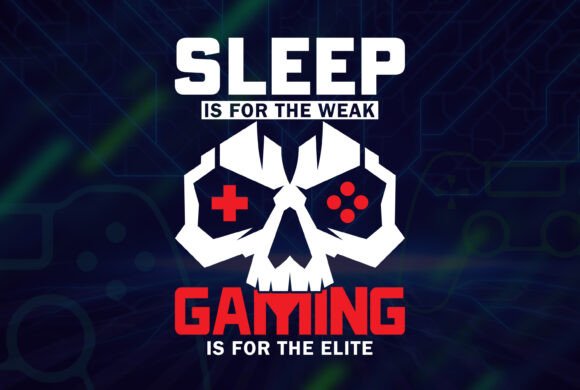
Building a Brand: Integrating the "Sleep is for the Weak. Gaming T-Shirt" Design into Your Print-on-Demand Workflow
The modern creator economy operates at the intersection of lifestyle and identity. For entrepreneurs running print-on-demand (POD) stores, selecting a design isn't just about aesthetics—it's about strategic positioning. The "Sleep is for the weak. Gaming is for the elite" slogan is a prime example of a high-conversion concept that resonates deeply with a specific, dedicated audience. This article walks through the practical workflow of taking a digital asset like this—from file preparation to market deployment—ensuring you maximize quality, consistency, and long-term brand value.
Pre-Production Strategy: The Blueprint Phase
Before touching the file, the most critical step in any workflow is defining how the product fits into your broader catalog. The message appeals to competitive gamers, esports enthusiasts, late-night coders, and productivity-minded professionals who view rest as secondary to mastery. This overlaps perfectly with adults aged 20 to 50 who grew up with gaming and now have disposable income.
To integrate this into your preparation process:
- Scenario Mapping: Create a simple buyer persona document. Attach the design file to this persona. Who is the buyer? The night-shift IT professional. The competitive streamer. The entrepreneur burning the midnight oil. Understanding this prevents wasted marketing spend and aligns your product listing copy with their identity.
- Asset Preparation Checklist:
- Extract the ZIP file using WinRAR, 7-Zip, or your native OS extractor.
- Verify file integrity. Open the AI and EPS files to confirm the vector paths render cleanly. Check that the PNG and JPG are sharp at 100% zoom.
- Organize into subfolders:
Source_Files (AI_EPS)andPrint_Ready (PNG_JPG). This simple organizational workflow saves hours of searching later.
- Niche Validation: The "Sleep is for the weak" meme has deep roots in gaming culture. Including it in a dedicated "Gaming Culture" or "Niche Slogans" asset library allows for bulk processing and consistent branding across similar items.
Technical Preparation and Workflow Efficiency (The "How")
A smooth operational workflow relies heavily on starting with a clean, scalable file. The provided asset suite is specifically engineered for efficiency and compatibility across multiple platforms.
Format Selection and Platform Matching
The inclusion of AI, EPS, PNG, and JPG files covers every major POD platform requirement. Here is how to match the format to your production pipeline:
- Amazon Merch on Demand: Requires strict JPG dimensions and DPI. The provided JPG (4500x5400px at 300 DPI) aligns perfectly with their tier standards. Use this format for a frictionless upload process.
- Printful / Printify: These platforms offer automated mockup generation. Upload the transparent PNG directly. The transparent background ensures the mockup tool places the design cleanly on different colored garments without a distracting white box.
- Redbubble / Teepublic: The community favors detailed, vector-sourced artwork. Upload the high-res PNG for maximum clarity on their zoom feature. The 300 DPI ensures the text "Sleep is for the weak. Gaming is for the elite" remains razor-sharp.
- Embroidered Goods: If you plan to branch into embroidered hats or hoodies, the EPS and AI vector files are essential. Embroidery digitizers require clean vector paths to create stitch files efficiently.
Color Customization as a Workflow Multiplier
The "100 color changeable" aspect is a significant operational advantage. Instead of managing ten different files for ten different shirt colors, you maintain one master vector file. Here is the implementation process:
- Open the AI or EPS file in Adobe Illustrator or Affinity Designer.
- Select the text and graphic elements.
- Change the fill color to match the garment (e.g., gold ink for black shirts, black ink for white shirts, white ink for dark heathers).
- Export a new platform-specific file. This drastically reduces file bloat and increases operational speed.
Deployment Across Product Lines: Consistency and Efficiency
One of the strongest workflow advantages of a vector-based design is its multi-surface compatibility. The same asset can power your entire product catalog without losing quality or requiring extensive rework.
- T-Shirts and Hoodies: The primary market. Adjust the scale of the vector depending on the product. Use a front-center placement for tees and a large back print for hoodies. The vector format allows you to scale the design to 20 inches wide without pixelation.
- Accessories (Mugs, Pillows, Tote Bags): Because the PNG has a transparent background, you can drop it into a mockup generator in under thirty seconds. The consistent 300 DPI ensures professional-grade resolution on curved or textured surfaces.
- Workflow Tip: Create a "master mockup template" in your design software that pre-sizes the vector for each product type. For example, save a 12x12 inch canvas for square pillows and an 8x8 inch canvas for standard mugs. This eliminates repetitive sizing adjustments and standardizes your output.
Quality Control and Usability Testing
Establishing a quality control checkpoint in your workflow prevents customer complaints and returns. Treat the design asset as a raw material that must pass inspection before production.
- Visual Inspection: Before uploading, zoom in on the text "Sleep is for the weak. Gaming is for the elite" to confirm the sharp curves of the vector are intact. Vector sourcing prevents the jagged edges common with low-resolution raster files.
- Color Mode Check: The files are provided in RGB color mode. Most DTG (Direct-to-Garment) printers prefer RGB, but some production houses require CMYK. If your POD provider requires CMYK, use the AI or EPS file to convert the color mode in seconds without losing vibrancy. This is a flexibility that a flattened JPG cannot offer.
- Sample Ordering: Order a single sample of the t-shirt before launching the full product line. Compare the printed result to your on-screen mockup. Adjust your pre-press settings (brightness, contrast) based on the actual print. Document these settings in your project folder for future reorders.
Long-Term Asset Management and Iteration
The work does not end at the first sale. A professional workflow considers the lifecycle of the design and plans for future use.
Versioning and Library Building
Save copies of your color variations with clear naming conventions. For example: Gaming_Elite_BlackTee_GoldText.ai and Gaming_Elite_WhiteTee_BlackText.ai. This builds a mini-library that makes restocking sizes or reordering prints incredibly fast. When a customer buys a Large hoodie, you can locate the exact production file immediately.
Iteration Based on Performance Data
Monitor which products sell best. If hoodies outperform t-shirts for this specific design, adjust your workflow to prioritize hoodie mockups and product descriptions. Use the performance data to inform your next design project. If "Gaming is for the elite" resonates, consider creating a companion design such as "Keyboard is my Weapon" using the same typographic style. Consistency in design language builds brand recognition.
Archiving for Sustainability
Because the asset is made of 100% vector shapes, it is future-proof. If next year's trend shifts toward oversized prints or left-chest logos, you can resize and re-export the exact same file in minutes without any quality loss. After completing the deployment cycle, archive the master folder to cloud storage or an external SSD.
Good archival hygiene is the hallmark of a professional POD workflow. It protects your investment in time and ensures you can react quickly to market trends.
Practical Integration for the 20–50 Demographic
Authenticity drives conversions with this age group. They value messaging that reflects their reality—balancing professional responsibilities with personal passion for gaming.
- Marketing Workflow: Use the EPS or AI file to create social media snippets. Export a 1080x1080 pixel PNG for an Instagram post that asks, "Which game kept you up last night?" The high-res vector source guarantees your graphics look premium on mobile screens.
- Pricing Strategy: Position this as a premium piece of gamer identity merchandise rather than a generic discounted shirt. The high-quality file asset supports a higher perceived value. Customers aged 20 to 50 understand the craft behind a well-designed garment and are willing to pay for quality.
- Customer Experience: If you fulfill orders yourself, package the shirt with a small sticker of the logo. The transparent PNG file format makes it trivial to order a sheet of vinyl stickers from a local printer. This creates a cohesive unboxing experience that encourages repeat purchases and word-of-mouth marketing.
Conclusion: From Asset to Brand
Integrating a high-concept design like "Sleep is for the weak. Gaming is for the elite" into your product line is more than just uploading a file. It is a deliberate process of planning, technical execution, and consistent deployment. By treating the asset as a central component of a structured workflow—from ZIP extraction to final customer delivery—you ensure quality control, save time, and build a brand that resonates authentically with the modern gamer. The file provides the foundation; a solid workflow ensures it reaches its full market potential.